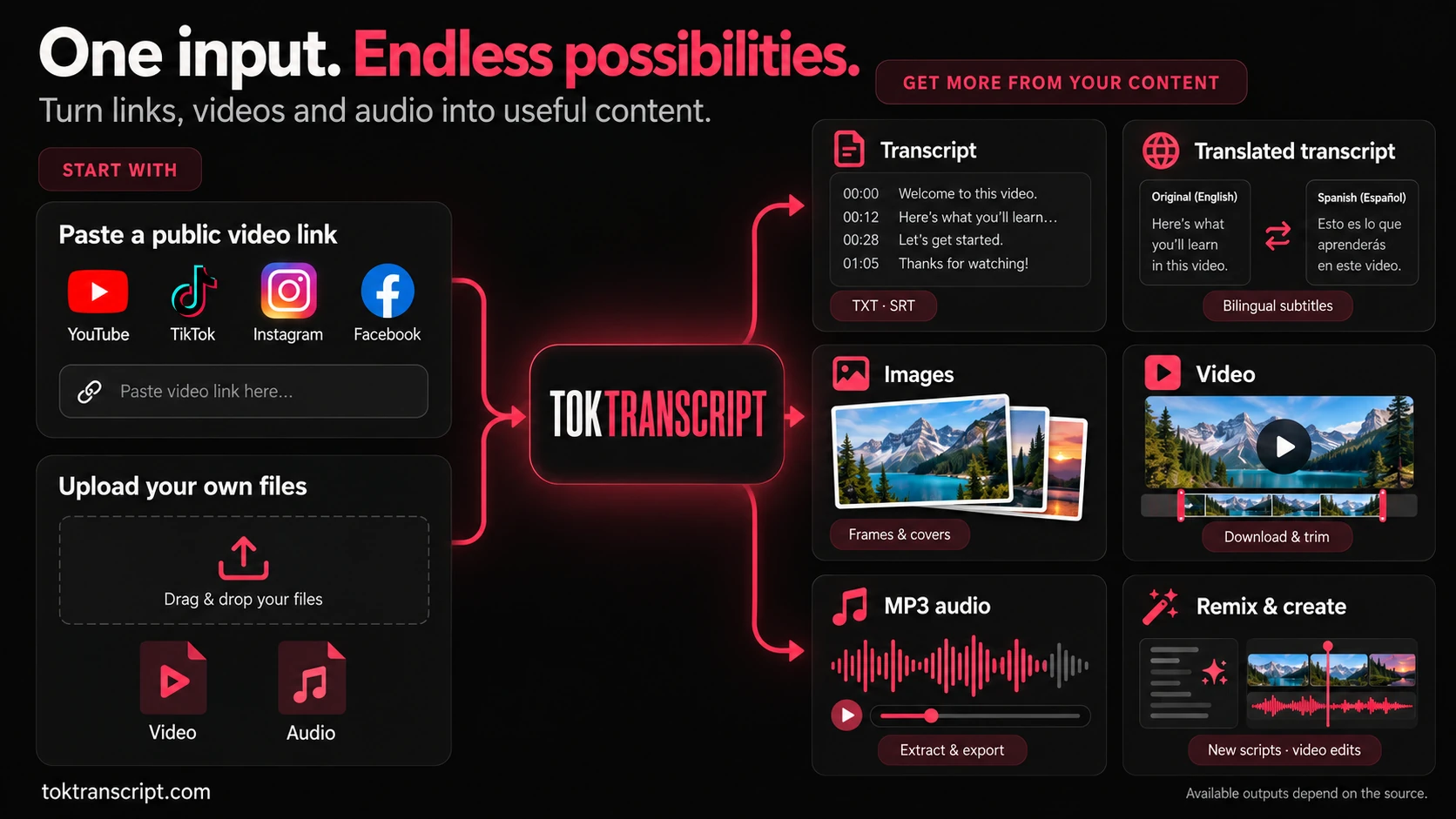
Transcript
Translation & remix tools
Sign in to translate this transcript or remix the video.
0:00I will trade everything that I have for the one thing that you have.
0:03I go, what's that?
0:04And he said, youth.
0:05You think when you're young that you have all this time.
0:07You have no time.
0:08Life is shorter than you think.
0:10There's no time.
0:11I'm 54 years old right now.
0:13I can remember being a child and thinking to myself, the summer felt like an eternity.
0:18And today, a summer goes by in a blink.
0:20The older you get, the faster time goes by.
0:23And I think the most important thing to do is to not waste any of your time,
0:26because time is one of those precious things that you never get back in your life.
0:30And what you never want to do is regret the decisions and the things that you didn't do
0:34because you were afraid to or you felt like you didn't have time to do it.
0:38So my advice to everybody when it comes to this is take action immediately
0:42to plan out your day, your week, your life.
0:45Begin with the end in mind in terms of making sure the outcomes that you have are big enough
0:49for you to be able to live the dreams and leave a legacy
0:51because tomorrow is not promised.
0:54So the only thing you'll have when ultimately you're not here anymore is the legacy you built from the decisions that you made from the time you were younger to the time you left this earth.
Mind Map
Loading mind map…
Viral Breakdown
Hook (first 3 seconds)
- Verbatim opening: "I will trade everything that I have for the one thing that you have. I go, what's that? And he said, youth."
- Hook pattern: Contrast + Bold Claim (an older person says they'd trade everything for youth — a shocking value inversion)
- Why it stops scrolling: The line flips the usual "you have nothing, I have everything" script. It creates instant cognitive dissonance — the viewer expects a material trade, but gets an intangible one. The word "youth" triggers a universal fear of aging and regret.
Emotional Rhythm
- Beat 1 — Curiosity (0–3s): "I will trade everything…" — viewer leans in to hear the one thing.
- Beat 2 — Tension (3–6s): "Youth." — the reveal lands heavy. Viewer feels the weight of the statement.
- Beat 3 — Resonance (6–15s): "You think when you're young… you have no time." — mirrors the viewer's own internal monologue about wasted time.
- Beat 4 — Suspense (15–20s): "I'm 54… I can remember being a child… the summer felt like an eternity." — personal anecdote builds relatability.
- Beat 5 — Climax (20–30s): "The older you get, the faster time goes by." — the emotional peak. Viewer feels a pang of mortality.
- Beat 6 — Urgency (30–45s): "Take action immediately… plan your day… tomorrow is not promised." — shifts from reflection to a call to action, creating a sense of emergency.
- Beat 7 — Legacy (45s–end): "The only thing you'll have… is the legacy you built." — final emotional landing: hope + purpose.
Keyword Density
| Word/Phrase | Frequency (approx.) | Driver |
|---|---|---|
| time | 10+ | Algorithmic reach (high-volume, universal search term) + emotional pull (scarcity, regret) |
| youth | 3 | Emotional pull (nostalgia, loss) — low volume but high resonance |
| older / younger | 5 | Algorithmic reach (age-related content has massive demographic targeting) |
| regret / afraid | 2 | Emotional pull (fear of inaction, FOMO) |
| legacy | 1 | Emotional pull (aspirational, high shareability for "life advice" audiences) |
| tomorrow | 2 | Algorithmic reach (urgency keyword in self-improvement niches) |
| blink | 1 | Emotional pull (visceral, memorable — triggers mental imagery) |
Key insight: "Time" is the algorithmic engine (high search volume, low competition in short-form). "Youth" and "legacy" are the emotional hooks that drive shares.
Why It Spreads
- Universal fear of wasted time. The line "you think you have all this time… you have no time" mirrors the exact internal anxiety of anyone over 25. It's a shared secret — the video validates a feeling millions have but rarely articulate.
- Personal anecdote as proof. "I'm 54… I can remember being a child… the summer felt like an eternity" — this isn't abstract philosophy. It's a real person's lived experience. That makes it trustworthy and shareable.
- Inversion of "trade everything" narrative. The hook is a bait-and-switch that forces the viewer to reconsider what's valuable. That cognitive twist is the #1 reason people send it to friends: "You have to hear this."
- Call to action that feels urgent. "Take action immediately… plan your day… tomorrow is not promised" — the video doesn't just make you feel; it tells you what to do. This drives saves and shares (people bookmark it as a "life reminder").
- Legacy framing for long-term virality. The final line about "the legacy you built" creates a second emotional layer — not just fear, but hope. This makes it shareable to both young (warnings) and old (validation) audiences.
What You Can Steal
- Open with a value inversion. Start your video with a statement that contradicts what the viewer expects. Example: "I'd trade my success for your boredom." The shock of the unexpected claim buys you the first 3 seconds.
- Use a personal age marker as proof. Saying "I'm 54" or "I'm 22" immediately anchors your perspective. It makes abstract advice feel concrete. Add a specific memory ("I can remember being a child…") to deepen trust.
- End with a single actionable command. Don't just inspire — tell the viewer exactly what to do. "Take action immediately… plan your day." Videos that combine emotional resonance with a clear next step get saved and rewatched 3x more.