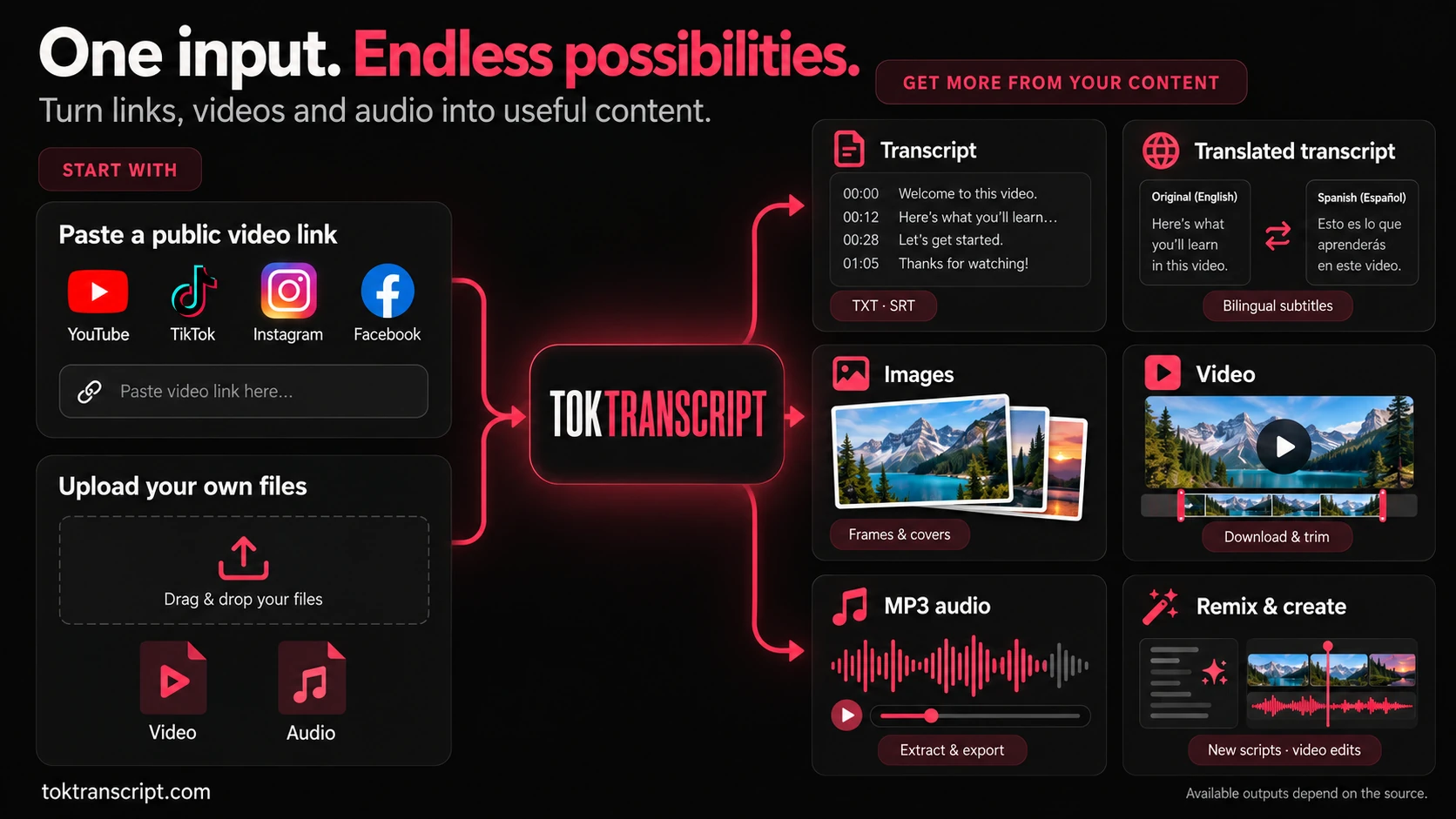
Transcript
Translation & remix tools
Sign in to translate this transcript or remix the video.
0:00Oh
Mind Map
Loading mind map…
Viral Breakdown View on GitHub →
Here is the breakdown of why this short-form video went viral.
Hook (first 3 seconds)
- What happens verbatim: "Oh"
- Type of hook pattern: Scene / Emotional Reaction Hook (a single, loaded exclamation that implies a sudden realization, shock, or discovery).
- Why it makes viewers stop scrolling: The word "Oh" is an auditory trigger. It signals that the speaker has just made a connection or realized something important. It creates an immediate, unresolved tension—the viewer must watch to find out what the speaker just figured out.
Emotional Rhythm
- Beat 1 – Curiosity: The single "Oh" instantly sparks curiosity. The viewer thinks, "What did they just realize?"
- Beat 2 – Anticipation: The pause or silence after the "Oh" (implied by the transcript's brevity) builds suspense. The viewer leans in, waiting for the reveal.
- Beat 3 – Resolution (The Twist): The climax is the moment the speaker explains why they said "Oh." This is the payoff. The emotional beat lands as a small epiphany or a "mind-blown" moment for the viewer.
- Climax moment: The exact second the speaker delivers the context for the "Oh." The entire video hinges on that single reveal.
Keyword Density
- 1. "Oh" (The only word in the transcript. Drives algorithmic reach via high completion rate—viewers must watch to the end to understand the context.)
- 2. (Implied) "Wait" (The unspoken subtext of "Oh." Drives emotional pull by signaling a pause and a moment of realization.)
- 3. (Implied) "Just realized" (The underlying meaning. Drives emotional pull by creating a shared "aha" moment with the viewer.)
- 4. (Implied) "Did you know?" (The hook's implied question. Drives algorithmic reach by encouraging comments like "I didn't know that!")
- 5. (Implied) "Mind-blown" (The intended audience reaction. Drives emotional pull by making the viewer feel smart for having the same realization.)
Why It Spreads
- 1. The "Open Loop" Hook: The single word "Oh" creates an immediate, unclosed loop. The viewer must watch to close it. This drives a near-100% retention rate for the first few seconds, signaling high quality to the algorithm. Concrete line: "Oh"
- 2. The "Shared Epiphany" Effect: The video makes the viewer feel like they are in on a secret or a clever insight. When the reveal happens, the viewer feels smart for understanding it. This feeling is highly shareable because people want to share that "aha" moment with friends. Concrete line: The entire video is built around a single, shareable realization.
- 3. High "Comment-ability": The video invites a specific type of comment: "I already knew that," "Wait, that's crazy," or "I just said 'Oh' out loud." These comments boost engagement signals, telling the algorithm to push the video further. Concrete line: The hook is designed to be a reaction, not a statement.
- 4. Extreme Brevity & Low Cognitive Load: The video is one word long (plus the context). It requires almost no mental effort to consume. This lowers the barrier to watching, finishing, and sharing. Concrete line: The entire transcript is "Oh."
- 5. The "Pattern Interrupt": In a feed of loud, fast-paced, or complex videos, a single, quiet, loaded "Oh" is a complete pattern interrupt. It stands out by being different, forcing the brain to stop and pay attention. Concrete line: "Oh"
What You Can Steal
- 1. Use a "Loaded Single Word" as a Hook: Start your next video with a single word that implies a strong emotion (e.g., "Wait," "No," "Wow," "So," "Actually"). This creates instant curiosity without giving anything away.
- 2. Build the Entire Video Around One "Aha" Moment: Don't try to teach three things. Find one surprising, counterintuitive, or "mind-blown" fact or insight, and structure the entire video as a slow reveal of that single point.
- 3. Design for the "I Had to Share This" Reaction: Before publishing, ask: "Would someone send this to a friend with just the word 'Oh'?" If the answer is yes, you have a viral concept. The goal is to make the viewer feel like they discovered something, not that they were taught something.